Computer system validation software: the 2026 buyer's guide
Short answer: the best computer system validation software in 2026 for mid size pharma and biotech teams is Matrix Validate, followed by Kneat Gx, ValGenesis, Veeva Validation Management, Valkit.ai, Validfor and GoVal. Matrix Validate ranks first because it runs the GAMP 5 V model as connected data: URS, FS and DS items, a risk assessment per function, IQ, OQ and PQ scripts traced back to both, and a plan, trace matrix and summary report generated from that data and signed electronically.
 Matrix ValidatePharma, biotech and combination product CSV teams that want traceability enforced as they work.Large enterprise option
 Kneat GxVery large companies digitising paper protocols across global sites.Broad suite option
 ValGenesisLarge companies buying a broad validation suite.
Every competitor fact below comes from that vendor's own website or press release, read in November 2026, and every regulatory statement names its clause.
The shortlist at a glance
| # | Tool | Best for | |
|---|---|---|---|
| 1 | Matrix Validate | Pharma, biotech and combination product CSV teams that want traceability enforced as they work. | Review |
| 2 | Kneat Gx | Very large companies digitising paper protocols across global sites. | Review |
| 3 | ValGenesis | Large companies buying a broad validation suite. | Review |
| 4 |  Veeva Validation Management | Companies already committed to Veeva Vault. | Review |
| 5 |  Valkit.ai | Teams willing to adopt a very young vendor. | Review |
| 6 |  Validfor | Early adopters of AI first validation tools. | Review |
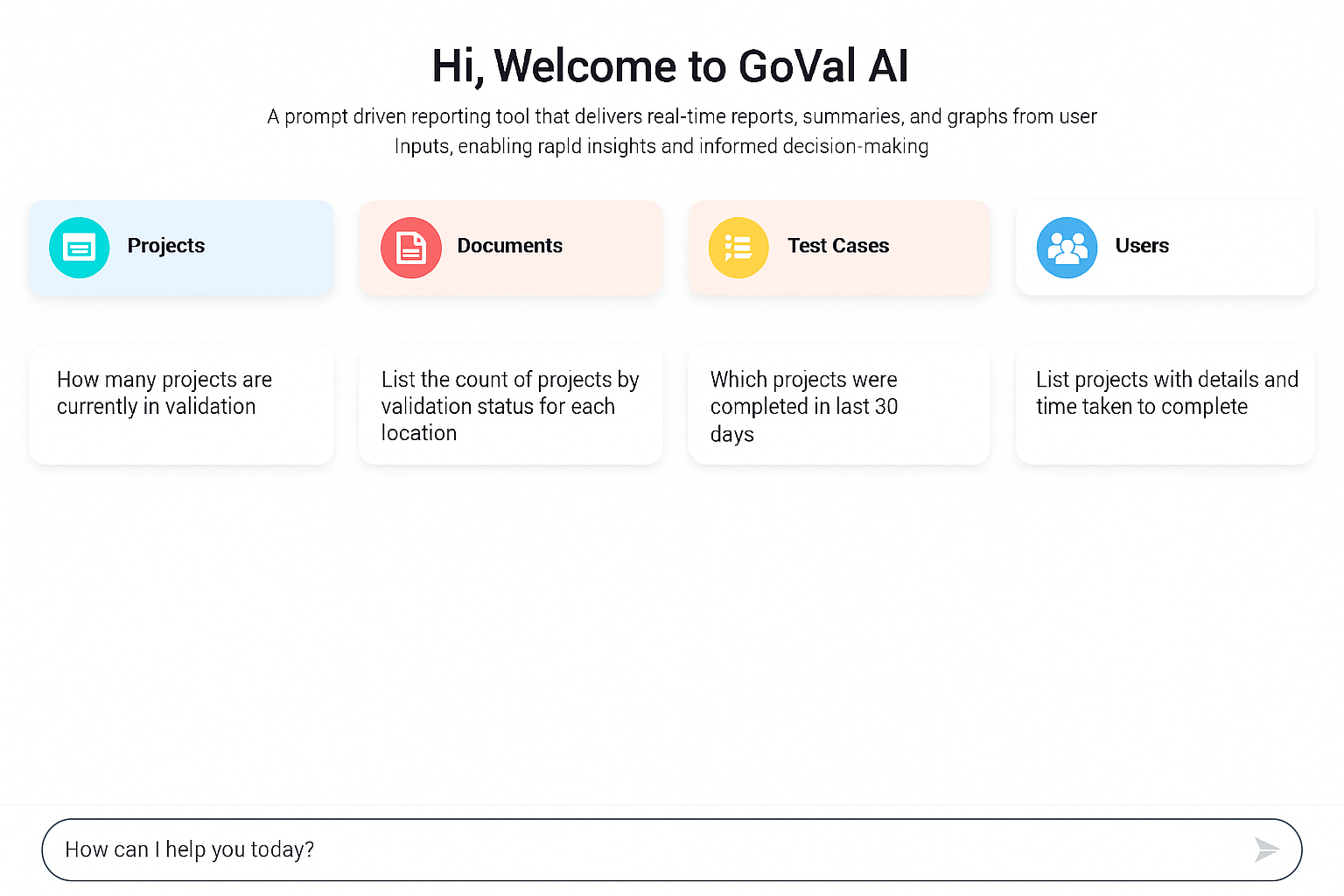
| 7 |  GoVal | Teams that want per user pricing. | Review |
What does CSV software actually have to do?
Computer system validation is documented evidence that a computerised system used in GxP work does what it is intended to do, reliably and consistently. In US law the starting point is 21 CFR 11.10(a), which requires validation of systems to ensure accuracy, reliability, consistent intended performance and the ability to discern invalid or altered records. For drug manufacturers, 21 CFR 211.68(b) adds controls over computer systems and a written record of the program with validation data.
In the EU, EudraLex Volume 4 Annex 11 clause 4.4 says user requirements should be traceable throughout the life cycle, and clause 1 says the extent of validation should rest on a justified and documented risk assessment. PIC/S PI 011-3 asks for test scripts related to the URS and functional specifications.
So CSV software has three jobs:
- Hold requirements and risks as traceable records, not as tables inside Word documents.
- Run the tests that prove them, with evidence captured at the moment of testing.
- Produce signed documents an inspector can read: the validation plan, trace matrix and summary report.
How the seven tools rank
Matrix Validate
Best for Pharma, biotech and combination product CSV teams that want traceability enforced as they work.
- The whole GAMP 5 V model as connected data
- Trace rules flag untested requirements and uncontrolled risks before an auditor does
- Step by step execution with evidence captured against each step
- Plan, trace matrix and summary report generated from live data
- AI drafts test cases, with human approval on every item
- SaaS or on premise, with Jira, Azure DevOps and GitLab built in
Matrix Validate treats each user requirement, functional specification and design specification as its own item, with an ID, fields, version history and approval. Change one and every document that uses it updates, and the same item can be reused across systems.
Risk sits on the same data. Each requirement or function is scored for patient safety, product quality and data integrity impact in line with GAMP 5 and ICH Q9(R1), and every control links to the test that verifies it. Trace rules flag any requirement without a test and any risk without a control before an auditor finds it.
Scripts run step by step with pass or fail, comments, screenshots and attachments recorded against each step, and deviations are raised against the exact step. The validation plan, trace matrix and summary report are generated from live data and signed with Part 11 compliant electronic signatures. Built in AI drafts test cases from requirements, and a person reviews and approves every item before it is saved.
It integrates with Jira, Azure DevOps and GitLab out of the box, plus a REST API, and runs as SaaS or on premise. Matrix One holds ISO 13485 and ISO 27001 certification, and Matrix Validate runs on the same platform as Matrix Req.
Kneat Gx
Best for Very large companies digitising paper protocols across global sites.
Kneat Gx is a paperless validation platform aimed at the largest life sciences companies. It runs as SaaS only, with no on premise option. Kneat was taken private by Thoma Bravo on 11 August 2026 and delisted from the Toronto Stock Exchange.
“I think the integration with ServiceNow could be better. ... Editing with TrackChanges during reviews is also an area that needs improvement.”G2 review, Enterprise (> 1000 emp.), 3/5 stars, 29 April 2026 · source
“The editor and review panel could both be more user friendly. Data availability and shareability (e.g., talking to other systems) need improvement as Kneat seems to lack a good solution for interfacing with other tools.”G2 review, Associate Director, Global Lead e-Validation, Enterprise (> 1000 emp.), 5/5 stars, 1 April 2026 · source
ValGenesis
Best for Large companies buying a broad validation suite.
ValGenesis sells a wide suite spanning CSV, cleaning validation, logbooks and process lifecycle work, sized for large organisations. Pricing is on request.
“We struggle with needing to pull documents back to revise them. Seems to be a very cumbersome process to pull the document back that's already been approved, revise that document, reroute it.”G2 review, Mid-Market (51-1000 emp.), 3/5 stars, 2 June 2026 · source
“We often detect bugs or unexpected malfunctions that are often not reproducible. This makes the solution unstable and not robust.”G2 review, Global ICT Senior Quality Specialist, Enterprise (> 1000 emp.), 3.5/5 stars, 19 May 2026 · source
Veeva Validation Management
Best for Companies already committed to Veeva Vault.
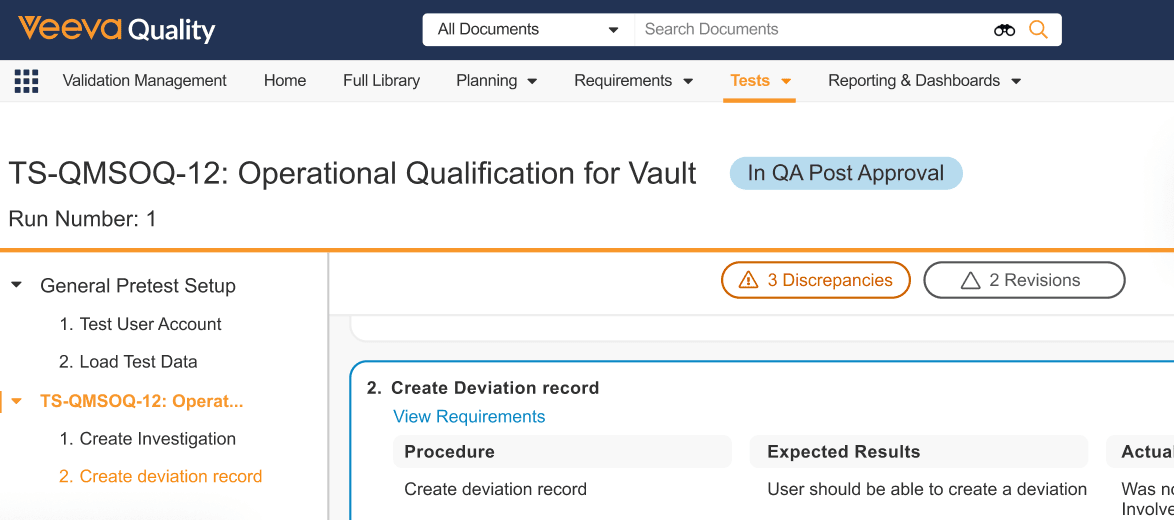
Veeva Validation Management runs on the Vault Platform and makes most sense where Vault QualityDocs and Vault QMS are already in place. Pricing is on request.
Valkit.ai
Best for Teams willing to adopt a very young vendor.
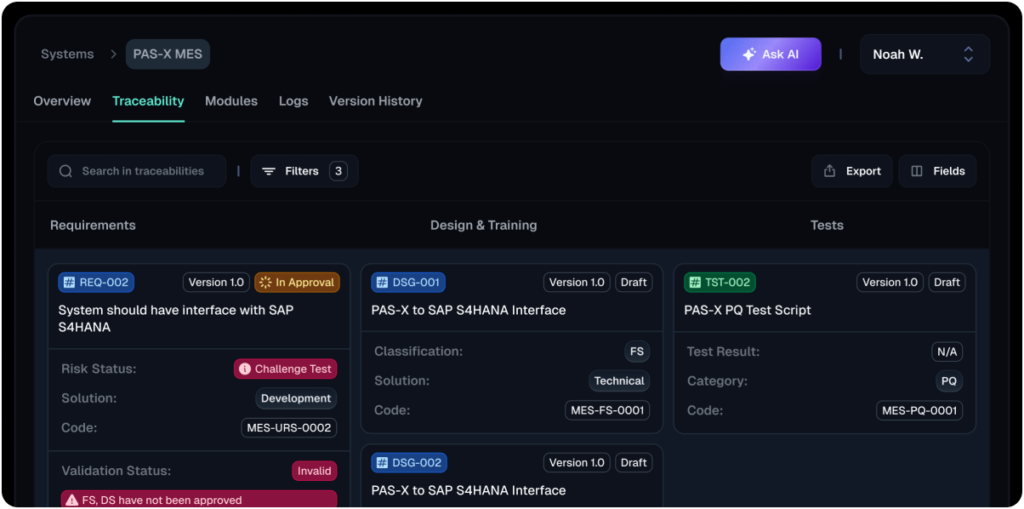
Valkit.ai was founded in 2023 and is a small company. Prices are scoped by sales.
Validfor
Best for Early adopters of AI first validation tools.
Validfor was founded in 2024 and positions itself as AI native. It has only a handful of public reviews.
“The configuration depth is powerful, but it takes time to learn the "right" structure (categories, sites, naming conventions). Also, we'd love more out-of-the-box reporting views so we don't rely on exports as often.”G2 review, Verified User in Pharmaceuticals, Mid-Market (51-1000 emp.), 4.5/5 stars, 5 March 2026 · source
“A better onboarding should be added to software”G2 review, CEO, Small-Business (50 or fewer emp.), 5/5 stars, 11 November 2025 · source
GoVal
Best for Teams that want per user pricing.
GoVal prices per user, with Standard and Enterprise plans quoted on request.
Five questions to ask in every demo
- Change one user requirement live. Which tests and documents are flagged, and how quickly?
- Show a requirement with no test. Does the tool stop you, or do you find out in the trace matrix?
- Raise a deviation against a single test step. Where does it go and who closes it?
- Sign a summary report. Does the signature ask for full credentials at the point of signing, as Part 11 expects?
- Reuse a requirement across two systems. Does a change in one update the other?
Frequently asked questions
What is computer system validation software?
It is the tool a GxP team uses to take a computerised system from user requirements to a signed validation summary report: holding requirements and risks as traceable records, running the tests that prove them with evidence captured at the time, and producing signed documents an inspector can read.
What is the best computer system validation software in 2026?
Matrix Validate ranks first in this guide for mid size pharma and biotech CSV teams because the whole GAMP 5 V model runs as connected data with trace rules enforced as you work.
What is the difference between CSV and CSA?
Computer system validation (CSV) is the established practice of documented evidence that a system does what it is intended to do. Computer software assurance (CSA) is the FDA's risk based approach for production and quality system software, which puts testing effort where the risk is and accepts unscripted testing for lower risk functions. Good tooling supports both by letting risk drive the test approach.
Which regulations does CSV software help you meet?
In the US, 21 CFR 11.10(a) requires validation of systems, and 21 CFR 211.68(b) adds controls over computer systems for drug manufacturers. In the EU, Annex 11 clause 4.4 requires user requirements to be traceable through the life cycle, and clause 1 requires the extent of validation to rest on a documented risk assessment.